
AI implementation
AI in your operations, built as a system you can run. Not a pilot you cannot.
You may have run a pilot already. It was impressive for a month, and then it stalled. That is the normal outcome, and it is avoidable.
AI implementation and integration for established companies: we find where AI genuinely removes work or risk in a process, a product or a workflow, prove it, build it in with your data, your permissions and your regulator, and take responsibility for running it.
 Our services are available worldwide,
including Germany







5%
of custom enterprise AI tools reach production
MIT NANDA, 2025: the number this page exists to beat
6
questions settled and written down for every AI component
the model and its swap, what happens when it is unavailable, where the data lives, which decisions are logged, whether it is working and who runs it next year
2x
the success rate of external partnerships against internal builds
in the same MIT study
Products we have shipped for
More than 80 products since 2013, under FCA, PSD2 and clinical scrutiny. Two of them have had AI inside them for years: Cyberexpert, a compliance SaaS with the client's custom-trained AI inside it, and Reachbird, an influencer platform built around an image-recognition search engine.
Which of these is you?
Three situations we hear in the first call
You have the initiative and need the team
You know the process, you know roughly what AI should do in it, and your internal team is full. You need a senior team that can take it from your brief to production without you managing every hand. Start with the sprint if the hard part is unproven; start with delivery if it is not.
You were handed the AI mandate
Leadership wants AI in the business, it is now your task, and every vendor conversation ends in a pilot proposal. You need a partner who translates what AI can and cannot do into your company's processes, in your words, before anyone commits a budget. The sprint was built for this.
You decide, and you are not technical
You will sign the budget, and you are reading this to understand what you would be buying. The short version: a decision you can defend, then a working system with the questions a regulator or an auditor will ask already answered, then someone accountable for running it. Everything below is the long version.
The pilot problem
Most AI pilots never become systems. The reason is not the model.
MIT's 2025 study of 300 public AI initiatives found that 95% of organisations are getting zero return, and that only 5% of custom enterprise AI tools reach production. The authors are explicit that the divide is not driven by model quality or regulation; it is determined by approach. One more finding from the same report matters for how you buy: external partnerships see twice the success rate of internal builds (MIT NANDA, The GenAI Divide, July 2025).
The pilots that stall share a pattern we see in the audits we run: a model wired straight into a process with nobody deciding what happens when it is wrong, unavailable or replaced; data flowing somewhere the regulator has not approved; and no record an auditor could read. A chat window can be impressive for a month. A system has to answer the questions in the table below on day one.
| Question | A pilot | A system |
|---|---|---|
| Which model, and what happens when a better or cheaper one appears? | Hard-wired to one vendor | Behind an interface; swapped without a rebuild |
| What happens when the model is unavailable or unsure? | The process stops, or guesses | A fallback: the safe default, a person, or stop and report |
| Where does the data go, and does it leave the EU or the US? | Wherever the API is | Where your regulator expects it, with retention and erasure written down |
| What did it decide, and can an auditor read it? | A chat log, if that | Every decision logged with the inputs it saw and the version it ran |
| Is it working? | Nobody can say | An evaluation set and a baseline, measured before launch and after every change |
| Who runs it next year? | The person who built the demo | A named team, or your team with the runbook and the monitoring in place |
We settle those six questions for every AI component, per project, and write the answers down. That is the difference between the 5% and the rest.
Get the decision before anyone sells you a pilot.
Two weeks on one process: where AI genuinely removes work or risk, what data it needs, what your regulator will ask, what it would cost to run, and a working prototype of the hard part where the question needs one. Fixed scope, quoted in the first call, yours to keep whatever you decide next.
What we build
AI in a process, a product or a workflow
The right place for AI depends on the process, the data you already have and the decision the AI would be taking. We decide where it fits before we build, and we say where it does not.
Decisions inside a process
Classification, routing, prioritisation, anomaly detection: the high-volume repetitive decisions a team makes all day, taken by a model under rules, with a person on the exceptions. Best when the process handles many similar cases and the cost of a wrong one is known.
Documents and language
Extraction, summarisation, drafting and search over contracts, claims, records and correspondence, with the source shown next to every answer. Best when your people spend their days reading and the records are regulated.
Assistance inside your product
Suggestions, smart defaults and natural-language workflows built into the software your customers already use, as part of the product, not a bolt-on. This is where the AI features we used to sell as a separate service now live.
Intelligence over your data
Trends, anomalies and predictions from the data your systems accumulate, surfaced where the decision is made. Best when analysts currently spend their effort finding what the model can find.
Adding AI to a system that is itself holding you back is a modernization first. Legacy modernization
How it runs
A decision, then a system, then someone who runs it
1
Clarity Sprint: two weeks, optional
We take one bounded process or initiative and test what is uncertain about it: where AI genuinely removes work or risk and where it would only add both, what data it needs and whether you have it, what your regulator will ask, and what it would cost to run. You leave with a decision you can defend, a recommended direction and an indicative scope and budget, backed by a working prototype of the hard part where the question needs one. If your initiative is already well defined, we start at stage 2. Every project names the number it has to move before code is written, and reports against it. What you bring: one sponsor who can decide, access to the process and the data it runs on, and about two hours a week of the people who do the work today.
2
Delivery to production
One senior team builds the AI into your process, product or workflow as part of a system: the integration with your existing software, the permissions, the fallback, the evaluation set and the audit trail, with the six questions above answered in writing and your legal and compliance advisors in the room from the architecture stage. Your Product Delivery Lead reports to you weekly. A pilot that stalls at "promising" is not an outcome we sell.
3
Run and evolve
Models change, prompts drift, regulations arrive. Most clients keep the team on as a Team-as-a-Service to run and evolve the system: monitoring, the next model, the next process. If you would rather run it yourself, we hand it over with the runbook, the monitoring and the evaluation set in place, and the operating responsibility written down either way.
How we build
The same standard for the AI we put in your product and the AI we build with
Our engineers work with AI coding agents inside VeryADR, our written engineering standard built from shipping regulated products since 2013. Every change is checked, reviewed by AI and by its author before it is merged, and approved by a second qualified engineer wherever it touches access, data, secrets, money or a contract. The AI we put inside your system is held to the same rules: behind an interface, with a fallback, with its data where your regulator expects it, with its decisions logged. The tools make us faster; the standard is what makes the result something you can run.
Proof
AI that has been in production for years, under regulators
Cyber / EU

Cyberexpert
An established cybersecurity firm wanted to own a new market before an EU regulation created it. We turned the regulatory steps into a live, self-service compliance SaaS with their custom-trained AI inside it; the parent reinvested and rolled it out.

More than 80 products shipped since 2013, under FCA, PSD2 and clinical scrutiny. See the work

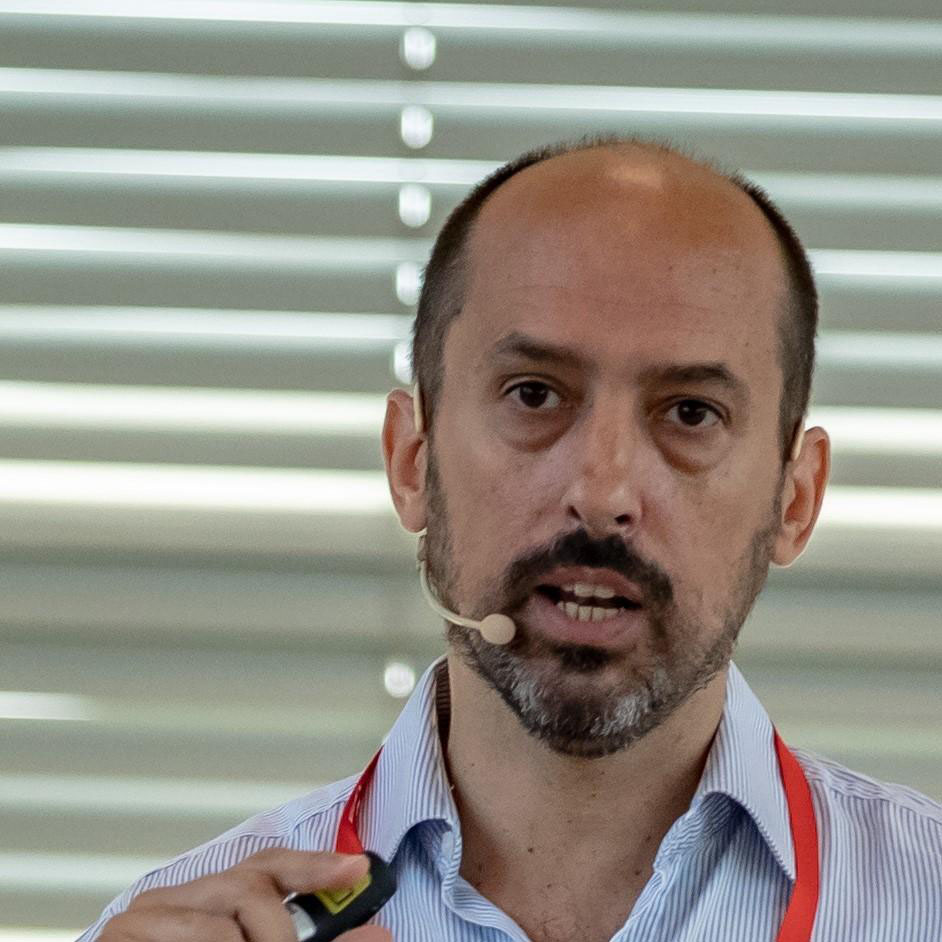
Philipp Martin
CEO & Co-Founder of Reachbird
%20--%3e%3csvg%20version='1.1'%20id='Ebene_1'%20xmlns='http://www.w3.org/2000/svg'%20xmlns:xlink='http://www.w3.org/1999/xlink'%20x='0px'%20y='0px'%20viewBox='0%200%202927.69%20366.04'%20style='enable-background:new%200%200%202927.69%20366.04;'%20xml:space='preserve'%3e%3cstyle%20type='text/css'%3e%20.st0{fill:url(%23SVGID_1_);}%20%3c/style%3e%3clinearGradient%20id='SVGID_1_'%20gradientUnits='userSpaceOnUse'%20x1='25.2367'%20y1='183.1596'%20x2='2902.4714'%20y2='183.1596'%3e%3cstop%20offset='0'%20style='stop-color:%234FBAAB'/%3e%3cstop%20offset='1'%20style='stop-color:%2334B9CB'/%3e%3c/linearGradient%3e%3cpath%20class='st0'%20d='M786.72,43.23L667.1,311.61h63.64l23.77-57.51h124.61l23.77,57.51c3.24,7.64,14.41,16.07,36.81,16.07%20s28.37-16.07,28.37-16.07l-120-268.38H786.72z%20M774.45,206.95l42.56-102.75l42.56,102.75H774.45z%20M433.97,199.66h124.6v-48.31%20h-124.6V93.07h141.09V43.23c0,0-151.25,0-163.49,0s-21.72-0.02-30.5,8.77c-8.79,8.79-8.83,17.89-8.83,30.42s0,229.2,0,229.2h207.81%20v-49.84H433.97V199.66z%20M257.97,140.62c0-60.19-44.86-97.39-116.56-97.39H25.24v268.38h62.11v-74.77h54.06h3.07l51.76,74.77%20c17.22,22.3,61.41,18.5,66.71,0l-60.19-86.27C237.64,210.4,257.97,180.87,257.97,140.62z%20M137.96,187.39H87.35V93.84h50.61%20c37.96,0,57.13,17.25,57.13,46.78C195.08,169.75,175.92,187.39,137.96,187.39z%20M1165.16,91.54c26.84,0,49.46,10.74,67.48,31.44%20l11.04-10.19l28.84-26.62c-25.3-30.68-64.03-47.54-110.42-47.54c-83.58,0-145.69,57.89-145.69,138.79%20c0,80.9,62.11,138.79,145.31,138.79c46.78,0,85.5-16.87,110.81-47.92l-39.88-36.81c-18.02,21.09-40.64,31.82-67.48,31.82%20c-50.23,0-85.88-35.27-85.88-85.88C1079.28,126.81,1114.93,91.54,1165.16,91.54z%20M1559.32,149.05h-121.92V43.23c0,0-6.65,0-22.83,0%20c-14.8,0-21.87-0.01-30.58,8.7c-8.71,8.71-8.7,15.76-8.7,30.48c0,17.16,0,229.2,0,229.2h62.11V201.58h121.92v110.03h62.11V43.23%20l-62.12-0.02L1559.32,149.05z%20M2754.47,43.23c0,0-68.85,0-82.65,0c-12.45,0-20.09-0.29-30.32,8.64c-8.48,7.4-8.95,20.05-8.95,30.6%20c0,10.55,0,229.14,0,229.14h121.92c87.8,0,148-52.91,148-134.19C2902.47,96.14,2842.27,43.23,2754.47,43.23z%20M2751.41,260.62h-56.74%20V94.23h56.74c53.29,0,88.18,31.82,88.18,83.2C2839.59,228.8,2804.69,260.62,2751.41,260.62z%20M2517.12,140.46%20c0-60.19-44.86-97.39-116.56-97.39h-116.17v268.38h62.11v-74.77h54.06h3.07l51.76,74.77c17.22,22.3,61.41,18.5,66.71,0l-60.19-86.27%20C2496.8,210.24,2517.12,180.72,2517.12,140.46z%20M2397.11,187.23h-50.61V93.68h50.61c37.96,0,57.13,17.25,57.13,46.78%20C2454.24,169.59,2435.07,187.23,2397.11,187.23z%20M1939.68,172.06c21.86-11.5,35.67-32.21,35.67-59.05%20c0-41.79-34.51-69.78-101.6-69.78h-131.13v268.38h138.79c70.55,0,107.35-26.84,107.35-73.23%20C1988.75,204.65,1969.59,181.64,1939.68,172.06z%20M1804.35,90.01h61.72c30.29,0,46.78,10.35,46.78,31.44%20c0,21.09-16.49,31.82-46.78,31.82h-61.72V90.01z%20M1876.81,264.84h-72.46v-66.33h72.46c32.21,0,49.46,10.74,49.46,33.35%20C1926.27,254.87,1909.01,264.84,1876.81,264.84z%20M2109.87,51.98c-8.79,8.79-8.75,15.93-8.75,30.43c0,14.49,0,229.2,0,229.2h62.11%20V43.23c0,0-11.82,0-22.91,0S2118.66,43.19,2109.87,51.98z'/%3e%3c/svg%3e)
The boundaries
What this service does not cover
A system that is itself holding you back. If the legacy platform cannot carry the roadmap, adding AI to it is the wrong first move; that is Legacy Modernization, and sometimes both in that order.
A prototype you or your team already built with AI tools. That is Vibe Code to Production: the audit and the hardening.
An AI pilot, a chatbot or an automation flow with no path to production and no one accountable for it. We do not sell these, and we say so in the first call.
Strategy decks about AI in general. We will tell you where AI fits in your process; we will not write a report about AI in your industry.
Honest fit
We'll tell you in the first call.
A good fit if
You are an established company with a real process and a sponsor.
The AI would take or support decisions that matter, with data, permissions and a regulator in the picture.
You want one accountable team from the decision to the running system.
You are prepared to measure whether it works.
Probably not a fit if
You want a demo for a board meeting and nothing after it.
You have no data, or no access to it.
Nothing is at stake if the AI is wrong.
You want hours of consulting rather than a shipped system.
Straight answers
The questions AI buyers ask us
Contact Us
Tell us which process you want AI in. If it is business-critical and it has to hold up in production, we should talk.
What happens next?
We'll get back to you within 48 hours to schedule a free online consultation with our founders, Máté and Ferenc. They'll discuss your initiative and give you honest, expert feedback on what it will take to build - whether you work with us or not.
Your data is safe
We'll only use what you share here to prepare for the conversation. No lists, no spam, no passing your details to anyone else.
What time zone are you in?
We're based in Budapest (GMT+2), working daily with teams across the EU, UK, US, and UAE. Overlap has never been the hard part.
Would you rather write an email?
Write to hello@verycreatives.com - we reply by the next working day at the latest.







%20--%3e%3csvg%20version='1.1'%20id='Ebene_1'%20xmlns='http://www.w3.org/2000/svg'%20xmlns:xlink='http://www.w3.org/1999/xlink'%20x='0px'%20y='0px'%20viewBox='0%200%202927.69%20366.04'%20style='enable-background:new%200%200%202927.69%20366.04;'%20xml:space='preserve'%3e%3cstyle%20type='text/css'%3e%20.st0{fill:url(%23SVGID_1_);}%20%3c/style%3e%3clinearGradient%20id='SVGID_1_'%20gradientUnits='userSpaceOnUse'%20x1='25.2367'%20y1='183.1596'%20x2='2902.4714'%20y2='183.1596'%3e%3cstop%20offset='0'%20style='stop-color:%232D363C'/%3e%3cstop%20offset='1'%20style='stop-color:%232D363C'/%3e%3c/linearGradient%3e%3cpath%20class='st0'%20d='M786.72,43.23L667.1,311.61h63.64l23.77-57.51h124.61l23.77,57.51c3.24,7.64,14.41,16.07,36.81,16.07%20s28.37-16.07,28.37-16.07l-120-268.38H786.72z%20M774.45,206.95l42.56-102.75l42.56,102.75H774.45z%20M433.97,199.66h124.6v-48.31%20h-124.6V93.07h141.09V43.23c0,0-151.25,0-163.49,0s-21.72-0.02-30.5,8.77c-8.79,8.79-8.83,17.89-8.83,30.42s0,229.2,0,229.2h207.81%20v-49.84H433.97V199.66z%20M257.97,140.62c0-60.19-44.86-97.39-116.56-97.39H25.24v268.38h62.11v-74.77h54.06h3.07l51.76,74.77%20c17.22,22.3,61.41,18.5,66.71,0l-60.19-86.27C237.64,210.4,257.97,180.87,257.97,140.62z%20M137.96,187.39H87.35V93.84h50.61%20c37.96,0,57.13,17.25,57.13,46.78C195.08,169.75,175.92,187.39,137.96,187.39z%20M1165.16,91.54c26.84,0,49.46,10.74,67.48,31.44%20l11.04-10.19l28.84-26.62c-25.3-30.68-64.03-47.54-110.42-47.54c-83.58,0-145.69,57.89-145.69,138.79%20c0,80.9,62.11,138.79,145.31,138.79c46.78,0,85.5-16.87,110.81-47.92l-39.88-36.81c-18.02,21.09-40.64,31.82-67.48,31.82%20c-50.23,0-85.88-35.27-85.88-85.88C1079.28,126.81,1114.93,91.54,1165.16,91.54z%20M1559.32,149.05h-121.92V43.23c0,0-6.65,0-22.83,0%20c-14.8,0-21.87-0.01-30.58,8.7c-8.71,8.71-8.7,15.76-8.7,30.48c0,17.16,0,229.2,0,229.2h62.11V201.58h121.92v110.03h62.11V43.23%20l-62.12-0.02L1559.32,149.05z%20M2754.47,43.23c0,0-68.85,0-82.65,0c-12.45,0-20.09-0.29-30.32,8.64c-8.48,7.4-8.95,20.05-8.95,30.6%20c0,10.55,0,229.14,0,229.14h121.92c87.8,0,148-52.91,148-134.19C2902.47,96.14,2842.27,43.23,2754.47,43.23z%20M2751.41,260.62h-56.74%20V94.23h56.74c53.29,0,88.18,31.82,88.18,83.2C2839.59,228.8,2804.69,260.62,2751.41,260.62z%20M2517.12,140.46%20c0-60.19-44.86-97.39-116.56-97.39h-116.17v268.38h62.11v-74.77h54.06h3.07l51.76,74.77c17.22,22.3,61.41,18.5,66.71,0l-60.19-86.27%20C2496.8,210.24,2517.12,180.72,2517.12,140.46z%20M2397.11,187.23h-50.61V93.68h50.61c37.96,0,57.13,17.25,57.13,46.78%20C2454.24,169.59,2435.07,187.23,2397.11,187.23z%20M1939.68,172.06c21.86-11.5,35.67-32.21,35.67-59.05%20c0-41.79-34.51-69.78-101.6-69.78h-131.13v268.38h138.79c70.55,0,107.35-26.84,107.35-73.23%20C1988.75,204.65,1969.59,181.64,1939.68,172.06z%20M1804.35,90.01h61.72c30.29,0,46.78,10.35,46.78,31.44%20c0,21.09-16.49,31.82-46.78,31.82h-61.72V90.01z%20M1876.81,264.84h-72.46v-66.33h72.46c32.21,0,49.46,10.74,49.46,33.35%20C1926.27,254.87,1909.01,264.84,1876.81,264.84z%20M2109.87,51.98c-8.79,8.79-8.75,15.93-8.75,30.43c0,14.49,0,229.2,0,229.2h62.11%20V43.23c0,0-11.82,0-22.91,0S2118.66,43.19,2109.87,51.98z'/%3e%3c/svg%3e)
"VeryCreatives is not only a reliable partner for IT-development, but also understands our whole business model completely. Therefore, the VC-team helped us actively to define the right product strategy. Thank you, VeryCreatives!"

Philipp Martin
CEO & Co-Founder, Reachbird